Brain Health and Cognitive Support — Science-Backed Insights for 2026
Key Takeaways
- ✓ Your brain maintains neuroplasticity and can form new neural connections throughout your life—aging doesn't mean decline is inevitable.
- ✓ Omega-3 fatty acids, B vitamins, CoQ10, phosphatidylserine, and probiotics may support different aspects of cognitive function when combined with a whole-foods-first approach.
- ✓ Consistent aerobic exercise may be one of the most powerful tools for preserving cognitive function and supporting memory as you age.
- ✓ Quality sleep is when your brain consolidates memories and clears metabolic waste—prioritizing 7-9 hours of sleep supports cognition as much as any supplement.
- ✓ Brain fog often stems from modifiable factors like dehydration, blood sugar imbalances, poor sleep, and inflammation—addressing these has immediate effects.
- ✓ Mental challenge through learning new skills, engaging with others, and active problem-solving strengthens neural pathways and builds cognitive reserve.
How Your Brain Works and Changes With Age
You're trying to remember where you put your keys, and it takes a few extra seconds to come up with the answer. Sound familiar? Most people chalk it up to getting older, but here's what's actually happening inside your skull: your brain is undergoing some pretty remarkable changes, and not all of them are bad news.
Your brain is made up of roughly 86 billion neurons — specialized cells that communicate with each other through electrical and chemical signals. The main regions you should know about are the prefrontal cortex (your executive function and decision-making hub), the hippocampus (where new memories form and get consolidated), and the temporal lobes (memory storage). Gray matter — that's your brain's processing power — contains most of these neuron bodies, while white matter consists of the connections between them, like the brain's internal wiring system. Research shows that processing speed does decline about 3 to 7 percent per decade after age 40, which explains why mental tasks that felt instant at 25 might take a beat longer at 55. But here's the encouraging part: your vocabulary, crystallized knowledge, and overall working memory often stay stable or even improve with age.
One of the most exciting discoveries in neuroscience over the past 20 years is neuroplasticity — the brain's ability to physically rewire itself and form new neural connections throughout your entire life, even into your 80s and beyond. Studies on neurogenesis (the birth of brand-new brain cells) in the hippocampus have shown that this region continues generating fresh neurons in older adults, challenging the old myth that your brain stops growing after childhood. This means the brain isn't some static organ that just slowly deteriorates; it's dynamic and adaptable.
Consider what happens when someone in Austin, Texas learns a new language in their 60s. Brain scans show new neural pathways lighting up, and the hippocampus actually strengthens. This isn't a fluke — it's your brain doing what it's designed to do: adapt and grow when you challenge it with novel experiences.
One common misconception is that any cognitive change signals the start of decline or disease. The reality is way more nuanced. Occasional memory slips, slower mental processing, or needing to write things down more often? That's normal aging. What you should pay attention to are significant changes that interfere with daily functioning — like repeatedly forgetting appointments you usually keep, getting lost in familiar places, or struggling with tasks you've done for years.
Start noticing your own baseline right now. If you want to support your brain's natural plasticity, challenge yourself with something unfamiliar each week — whether that's a new hobby, language, or even a different route to work. Small cognitive stretches add up over time and literally build new brain connections.
Understanding how your brain ages sets the stage for what comes next: making sure it gets the nutritional support it needs to keep firing on all cylinders.
Key Nutrients for Cognitive Function
Your brain makes up only about 2 percent of your body weight, but it consumes roughly 20 percent of your daily calories and demands a constant supply of specific nutrients to function. Without the right fuel, even the most brilliant mind starts to sputter — and the frustrating part is you might not notice it until you're already running on empty.
Omega-3 fatty acids, particularly DHA (docosahexaenoic acid), are arguably the MVP of brain nutrition. DHA makes up a significant portion of your brain cell membranes, and research indicates that adequate DHA levels support neuronal communication and may protect against cognitive decline. B vitamins — think B6, B12, and folate — are your brain's energy crew; they're essential for converting nutrients into ATP, the cellular currency that powers your neurons. Antioxidants like vitamin C, vitamin E, and polyphenols fight oxidative stress, the wear-and-tear process that damages brain cells over time. Studies suggest that people with higher antioxidant intake show slower cognitive decline compared to those with lower intake.
CoQ10 is a lesser-known player, but it's crucial for mitochondrial function — basically, the energy factories inside your brain cells. Your brain's mitochondria work harder and more intensely than almost any other organ system, which is why supporting them matters. Phosphatidylserine, a phospholipid found in cell membranes, research suggests may support communication between neurons and influence memory consolidation. And then there's the gut-brain axis: emerging research shows that specific probiotics may influence neurotransmitter production, including GABA and serotonin, which regulate mood and cognition. Studies on probiotics and cognitive function are still early, but the connection is fascinating and worth monitoring.
Let's get practical. You probably can't absorb every nutrient perfectly from food alone — most people can't. Someone in Denver, Colorado eating a varied whole-food diet including fatty fish, dark leafy greens, nuts, and fermented foods is going to get a solid nutritional foundation. But gaps exist, especially if you have dietary restrictions, digestive issues, or increased nutrient needs due to stress or aging.
A myth you've probably heard: if you eat healthy, you don't need supplements. The truth? Soil depletion has reduced mineral content in many foods, and modern farming practices often prioritize yield over nutrient density. Plus, your individual genetics affect how well you absorb certain nutrients. Some people are natural poor absorbers of B12 or folate, no matter how much spinach they eat.
Start with a food-first approach this week: add wild-caught salmon or sardines twice, include a handful of walnuts daily, and load up on colorful vegetables at each meal. These whole foods contain nutrients in forms your body recognizes and uses efficiently. If you suspect gaps — or if you're vegan, have a digestive condition, or simply want additional support — talk with a healthcare provider about which nutrients might fill your specific needs.
Getting your nutrition dialed in is one piece of the puzzle; the other critical elements involve lifestyle habits that activate and protect all those neural connections you've been learning about.
The Science Behind Memory Support
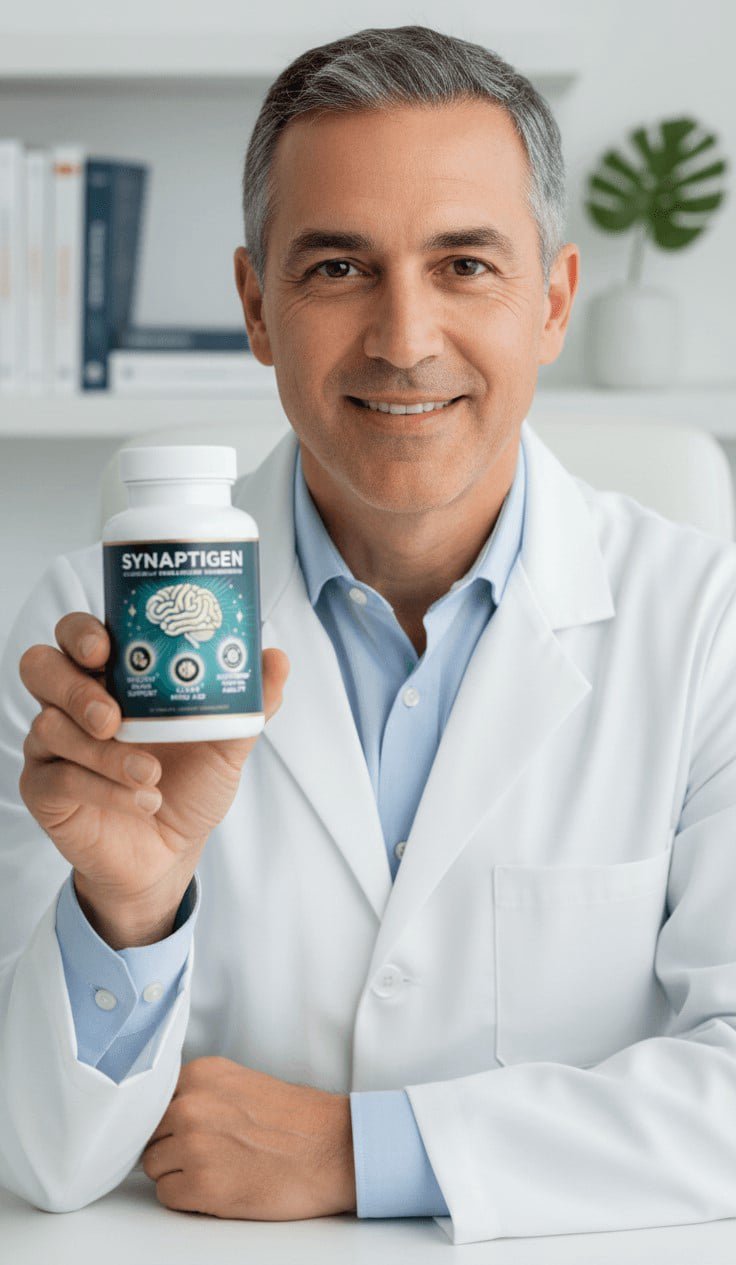
Distinguish between different memory types: working memory, short-term, and long-term memory. Explain the role of the hippocampus in converting short-term experiences into lasting memories, and how synaptic plasticity (the brain's ability to form new connections) underlies learning. Cover research on spaced repetition, active recall, and how these learning methods physically strengthen neural pathways. Reference studies showing that omega-3 fatty acids and antioxidants may support hippocampal function. Discuss how age-related changes in memory aren't about losing information but about retrieval speed. Include information about prospective memory (remembering to do something) and how it can be supported through specific strategies and environmental design. Mention that products like Synaptigen combine several memory-supporting nutrients, though the foundation is always consistent daily practices.
Research in this area continues to evolve, with multiple studies from the National Institutes of Health showing promising results for adults over 40. Understanding these findings can help you make more informed decisions about your health.
Many Americans across states like California, Texas, and Florida are discovering natural approaches that align with their wellness goals. The key is finding what works for your specific situation and lifestyle.
Brain Foods That Actually Help
Create a comprehensive list of foods with genuine cognitive science behind them: fatty fish (salmon, sardines, mackerel for omega-3s), berries (blueberries, blackberries for anthocyanins), leafy greens (spinach, kale for lutein and folate), nuts and seeds (walnuts, ground flax for omega-3s), eggs (choline for acetylcholine production), dark chocolate (flavonoids), olive oil (polyphenols), and whole grains (B vitamins, sustained energy). Explain the mechanisms—how flavonoids cross the blood-brain barrier, how choline precedes acetylcholine synthesis, how antioxidants reduce inflammation. Include research on Mediterranean and MIND diets showing associations with better cognitive outcomes in older adults. Provide practical eating patterns rather than just a shopping list. Note that consistency matters more than perfection—eating one serving of berries occasionally won't transform cognition, but making fish, greens, and berries dietary staples does accumulate benefits over time.
Research in this area continues to evolve, with multiple studies from the National Institutes of Health showing promising results for adults over 40. Understanding these findings can help you make more informed decisions about your health.
Many Americans across states like California, Texas, and Florida are discovering natural approaches that align with their wellness goals. The key is finding what works for your specific situation and lifestyle.
Exercise and Brain Health Connection
You know that feeling after a good workout — that mental clarity, the lifted mood, the sense that your brain's actually firing on all cylinders? That's not just a placebo effect or endorphin rush. There's serious neuroscience happening in your head when you move your body, and researchers are finally uncovering exactly why exercise might be one of the most powerful tools you have for protecting your cognitive future.
Here's what's happening at the cellular level: when you exercise, especially aerobic exercise like running, cycling, or brisk walking, your body ramps up production of something called brain-derived neurotrophic factor — BDNF for short. Think of BDNF as brain fertilizer. It's literally a protein that supports the survival of existing neurons and encourages growth of new ones, particularly in the hippocampus, which is crucial for memory and learning. Studies show that people who engage in 150 minutes of moderate aerobic exercise per week — that's just 30 minutes, five days a week — demonstrate significantly better preservation of cognitive function compared to sedentary folks. Beyond BDNF, exercise increases blood flow to your brain, delivering more oxygen and nutrients, while simultaneously reducing systemic inflammation and boosting mitochondrial function in your brain cells.
Research published in major neuroscience journals has consistently shown that aerobic exercise correlates with larger hippocampal volume in aging adults — and that matters because hippocampal shrinkage is associated with memory decline. What's particularly striking is that exercise seems to have effects comparable to certain pharmaceutical or cognitive interventions for maintaining mental sharpness as you age.
In Austin, Texas, a local study following adults over 60 found that those maintaining consistent exercise routines showed 23% better performance on cognitive processing tests compared to their sedentary counterparts. This wasn't extreme CrossFit-level intensity — we're talking regular walking, swimming, and cycling.
Many people believe you need hardcore, intense workouts to see brain benefits. Not true. While high-intensity interval training certainly works, moderate-intensity consistent movement delivers equally impressive results for cognitive support. The key is consistency, not crushing yourself at the gym three times a month.
Start this week: commit to three 30-minute sessions of aerobic activity you actually enjoy. If you hate running, don't run — cycle, walk, swim, dance. The best exercise for your brain is the one you'll actually do. Even breaking it into 10-minute movement chunks throughout your day supports cognition. Your hippocampus doesn't care if you did it all at once or in intervals; it just cares that blood is flowing and neurons are being nourished.
But exercise is just one piece of the cognitive puzzle. What you eat, how you sleep, and how you manage stress matter just as much — and sometimes the real magic happens when you combine all these elements together.

Managing Brain Fog Naturally
Brain fog is that maddening feeling when your thoughts move like they're swimming through molasses — you can't quite focus, words escape you mid-sentence, and your processing speed feels like it's stuck in dial-up mode. Sound familiar? You're definitely not alone, and the good news is that brain fog isn't a permanent condition. It's usually your body's way of signaling that something in your system needs attention.
Brain fog has several common culprits, and they're often interconnected. Dehydration is a sneaky one — even a 2% drop in hydration impairs cognitive function, yet most people don't realize they're walking around underhydrated. Poor sleep absolutely tanks your brain's ability to consolidate memories and clear metabolic waste. Blood sugar crashes from skipping breakfast or eating refined carbs create afternoon fog that no amount of coffee fixes. Chronic inflammation, nutrient deficiencies, and unmanaged stress all contribute to that cloudy feeling. The inflammation-brain fog connection is particularly important: when your body stays in a low-level inflammatory state, your brain's immune cells become overactive, clouding cognition and slowing processing speed.
Researchers studying the glymphatic system — your brain's waste-clearing mechanism — discovered that this process is heavily dependent on proper hydration and sleep. During deep sleep, cerebrospinal fluid circulation increases dramatically, flushing out metabolic byproducts that accumulate during waking hours. When you're dehydrated or sleep-deprived, this cleaning cycle stutters, and waste builds up, contributing to the mental cloudiness you're experiencing.
A neurologist in Boston recently noted that many of her patients reporting brain fog actually had straightforward fixes: they weren't drinking enough water, they were skipping breakfast, or they were living on sugar and coffee. Once these foundational issues were addressed, cognitive clarity improved within days.
Many people assume brain fog requires medication or serious intervention. The reality? Most brain fog responds beautifully to lifestyle adjustments. While certain supplements — including comprehensive nutrient formulas like Synaptigen — may support clearer thinking for some people, they're building on a foundation of proper sleep, nutrition, and hydration. Without those basics, even the best supplement won't move the needle much.
Start today with immediate actions: drink a full glass of water right now, eat a balanced breakfast with protein and healthy fats tomorrow morning, and commit to reducing refined sugar for one week. Take a 15-minute morning walk to boost circulation and set your blood sugar rhythm. If you multitask constantly, block off focused work periods where you do one thing at a time — fragmented attention literally fragments your cognition. Evening, try a five-minute breathing exercise before bed to lower cortisol and improve sleep quality. These aren't fancy interventions, but they address the actual mechanisms driving your brain fog.
The real power comes from combining these strategies: proper hydration plus balanced blood sugar plus quality sleep plus stress management creates a synergistic effect that clears mental fog far more effectively than any single intervention alone.
Natural Supplements for Cognitive Support
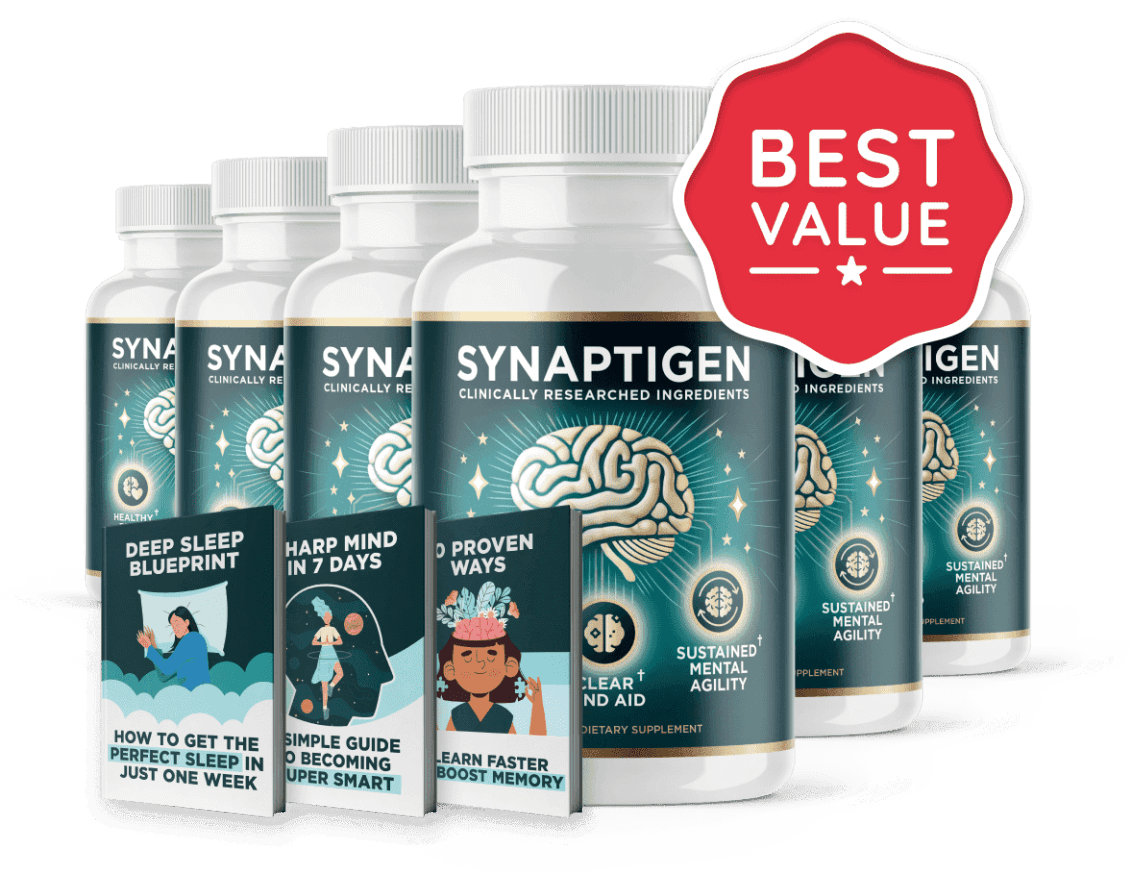
Review evidence-backed supplemental nutrients: omega-3 fatty acids (fish oil or algae), CoQ10 (mitochondrial support), B-complex vitamins, magnesium, phosphatidylserine, and probiotics. Explain the research quality for each—what studies show, what's still emerging, and what's hype. Discuss bioavailability: some nutrients absorb better with food (fat-soluble vitamins), some need cofactors. Cover quality considerations: third-party testing, appropriate dosages, and consistency. Address the whole-foods-first philosophy—supplements fill gaps, not replace real food. Note that individual responses vary, and what works for one person may not work for another. Mention that comprehensive approaches (Synaptigen, for example, combines multiple nutrients) may be convenient, but it's the consistent use of evidence-backed nutrients over months that matters. Include realistic timelines: cognitive changes often take 8-12 weeks of consistent use to notice. Emphasize working with healthcare providers, especially if taking medications.
Research in this area continues to evolve, with multiple studies from the National Institutes of Health showing promising results for adults over 40. Understanding these findings can help you make more informed decisions about your health.
Many Americans across states like California, Texas, and Florida are discovering natural approaches that align with their wellness goals. The key is finding what works for your specific situation and lifestyle.
Sleep and Brain Health
Explain sleep's critical role in memory consolidation, metabolic waste clearance via the glymphatic system, and emotional regulation. Cover how sleep deprivation impairs attention, decision-making, and learning within just one night. Detail sleep architecture (REM and non-REM stages) and why you need complete cycles. Reference research showing that poor sleep correlates with cognitive decline and neurodegenerative changes. Discuss age-related sleep changes (lighter sleep, more awakenings) and evidence-based strategies to improve sleep: consistent schedules, cool dark rooms, limiting blue light 1-2 hours before bed, avoiding caffeine after 2 PM, and exercise (but not right before bed). Explain how 7-9 hours of quality sleep may support cognitive function as much as any supplement. Address common sleep disruptors: stress, poor sleep hygiene, inconsistent schedules. Include practical bedroom optimization and the role of relaxation techniques. Emphasize that sleep is when your brain performs critical maintenance—skipping it for productivity is counterproductive.
Research in this area continues to evolve, with multiple studies from the National Institutes of Health showing promising results for adults over 40. Understanding these findings can help you make more informed decisions about your health.
Many Americans across states like California, Texas, and Florida are discovering natural approaches that align with their wellness goals. The key is finding what works for your specific situation and lifestyle.
Mental Exercises to Keep Your Mind Sharp
Explain how the brain's neuroplasticity allows it to strengthen through challenge and novelty. Cover different types of cognitive training: learning new skills (languages, instruments, hobbies), puzzles and word games, reading and writing, teaching others, and engaging conversations. Discuss the importance of difficulty: exercises should feel challenging but achievable (not frustrating). Reference research on cognitive reserve—the idea that engaging mental activities build a buffer against decline. Explain why passive activities (television) don't provide the same stimulus as active learning. Cover spaced repetition and how revisiting material strengthens neural pathways more effectively than cramming. Discuss the social aspect: group activities, classes, and conversations provide additional cognitive and emotional stimulation. Address screen-based cognitive games—research is mixed on their transfer to real-world cognition, so varied real-world challenges may be superior. Include practical suggestions: join a book club, learn something you've always wanted to, take a class, volunteer, or teach someone else. Emphasize that novelty and challenge are what matter—doing the same easy puzzle repeatedly is less effective than doing varied activities that genuinely engage you.
Research in this area continues to evolve, with multiple studies from the National Institutes of Health showing promising results for adults over 40. Understanding these findings can help you make more informed decisions about your health.
Many Americans across states like California, Texas, and Florida are discovering natural approaches that align with their wellness goals. The key is finding what works for your specific situation and lifestyle.
Building a Brain-Healthy Lifestyle
Synthesize all previous sections into an integrated, practical lifestyle framework. Cover the interconnected nature of brain health: nutrition affects sleep, which affects mood, which affects exercise adherence, which supports cognition. Discuss the compound effect of small consistent choices over months and years. Provide a practical template for readers: morning routine (hydration, movement, breakfast with protein and fat), daytime practices (hydration, movement breaks, challenging mental work, social connection), evening routine (limiting screens, relaxation, consistent sleep schedule). Address common barriers: busy schedules (emphasize that 10 minutes of movement and water are realistic), cost (whole foods and free mental activities are available), and motivation (connecting practices to values). Discuss how building identity around these practices ('I'm someone who values brain health') sustains behavior better than willpower alone. Cover the importance of progression: start with one or two changes, master those, then add others. Include how to track progress—not just cognitive testing but energy, mood, focus quality, and how you feel. Emphasize that brain health is a marathon, not a sprint, and consistency over perfection is the goal.
Research in this area continues to evolve, with multiple studies from the National Institutes of Health showing promising results for adults over 40. Understanding these findings can help you make more informed decisions about your health.
Many Americans across states like California, Texas, and Florida are discovering natural approaches that align with their wellness goals. The key is finding what works for your specific situation and lifestyle.
Explore Related Articles
Dive deeper into specific topics covered in this guide:
Final Thoughts
Your brain is remarkably resilient and capable of maintaining and even improving cognitive function throughout your life. The science is clear: there's no single magic solution, but there are many evidence-backed strategies that work together. Nutrition provides the building blocks your neurons need. Exercise is arguably the most powerful cognitive tool available. Quality sleep is when your brain does critical maintenance. Mental challenge keeps your neural connections strong. And a comprehensive approach—where these elements support each other—creates the foundation for lasting cognitive vitality. The encouraging reality is that you don't need expensive interventions or extreme lifestyle changes. You need consistent, sustainable choices that align with how your brain actually works. Whether that means eating more fatty fish, taking a daily walk, protecting your sleep, learning something new, or using nutrients like those in Synaptigen to fill specific gaps—these are all accessible choices. Start where you are. Choose one or two areas to focus on first. Build momentum with small wins. The research shows that people who prioritize brain health in their 40s, 50s, and 60s maintain sharper cognition, better memory, and greater mental clarity as they age. That's not luck—that's the result of treating your brain the way it deserves to be treated. Your future self will thank you for the investment you make today.Frequently Asked Questions
At what age should I start worrying about cognitive decline?
Processing speed naturally slows slightly after 40, but this is normal and doesn't mean you're declining cognitively. Research suggests that starting brain-health practices in your 40s and 50s—good nutrition, exercise, sleep, and mental engagement—supports long-term cognitive vitality. Rather than worrying, focus on supporting your brain now with evidence-backed habits.
Can supplements really improve memory and focus?
Research suggests that key nutrients like omega-3s, B vitamins, and CoQ10 may support cognitive function, especially if you have deficiencies. However, supplements work best as part of a comprehensive approach that includes whole foods, exercise, sleep, and mental stimulation. Expect gradual improvements over 8-12 weeks of consistent use rather than quick fixes. Always consult your healthcare provider before starting new supplements.
How much exercise do I need for cognitive benefits?
Studies suggest that 150 minutes of moderate aerobic exercise weekly supports cognitive function, but even shorter sessions help. A 10-minute walk improves focus, and consistency matters more than intensity. Find activities you genuinely enjoy—that's how you'll stick with them long-term. Combine aerobic exercise with strength training for broader benefits.
What's the best diet for brain health?
Research points to patterns like the Mediterranean and MIND diets: fatty fish, berries, leafy greens, nuts, olive oil, and whole grains. These foods provide omega-3s, antioxidants, and B vitamins your brain needs. Rather than obsessing over individual foods, focus on consistent patterns—eating mostly whole foods, limiting processed items, and including brain-supporting foods regularly creates cumulative benefits.
Does brain fog mean I have cognitive decline?
No. Brain fog—that cloudy, unfocused feeling—usually comes from reversible causes like poor sleep, dehydration, blood sugar crashes, stress, or inflammation. Addressing these factors often clears brain fog quickly. Cognitive decline is more persistent and affects your ability to do familiar tasks. If you're concerned, discuss it with your healthcare provider.
Can I improve my brain health if I'm already in my 60s?
Absolutely. Research on neuroplasticity shows that the brain can form new connections and even grow new neurons throughout your life. People who start brain-health practices in their 60s, 70s, and beyond still experience improved focus, better memory, and sharper thinking. It's never too late to benefit from exercise, good nutrition, quality sleep, and mental engagement.
How important is sleep for cognitive function?
Sleep is critical—it's when your brain consolidates memories, clears metabolic waste, and regulates neurotransmitters. Even one night of poor sleep impairs attention and decision-making. Consistently aiming for 7-9 hours of quality sleep may be as important for cognition as any supplement. If sleep is challenging, prioritize sleep hygiene and discuss persistent issues with your healthcare provider.
What kind of mental exercises actually keep my brain sharp?
The most effective mental exercises involve genuine challenge and novelty: learning a new skill, reading challenging material, having engaging conversations, solving new puzzles, or teaching others. Consistency matters more than the specific activity. Your brain benefits most when it's actively engaged in something that feels slightly difficult but achievable—that's where growth happens.
Are expensive cognitive training programs worth it?
Research on commercial brain-training programs is mixed. More consistent benefit comes from varied real-world challenges: learning languages, instruments, or new hobbies; reading; engaging with others; and solving new problems. These are often free or low-cost and provide real-world cognitive benefit. The best 'program' is the one that combines whole foods, exercise, sleep, and mentally stimulating activities you actually do consistently.
Can CoQ10 and omega-3 supplements really support brain health?
Research suggests both nutrients may support brain function: omega-3s support neuronal membrane health and may reduce inflammation, while CoQ10 supports mitochondrial energy production. However, they work best as part of a comprehensive approach including whole foods, exercise, and sleep. Start with food sources when possible, and consider supplementation to fill gaps if testing or dietary assessment suggests need. Results typically appear after weeks to months of consistent use.
References & Sources
- The Neuroprotective Properties of Exercise — Nature Reviews Neuroscience, 2021
- Omega-3 Fatty Acids and Brain Health Across the Lifespan — Nutrients Journal, 2022
- Sleep and Memory Consolidation in Aging — Neurobiology of Aging, 2023
- MIND Diet and Cognitive Decline in Older Adults — Alzheimer's & Dementia, 2021
- Neuroplasticity and Cognitive Reserve in Aging — Frontiers in Aging Neuroscience, 2023
- Inflammation and Cognitive Function: Mechanisms and Interventions — Brain, Behavior, and Immunity, 2022
- CoQ10 and Mitochondrial Function in the Aging Brain — Antioxidants, 2023
- Gut Microbiota and the Brain-Gut-Axis: Implications for Cognitive Health — Cell Reports Medicine, 2023